How ESL Systems Work: 5 Key Components
Discover how ESL systems work, from retail pricing software and system integration to wireless base stations and electronic shelf label updates.
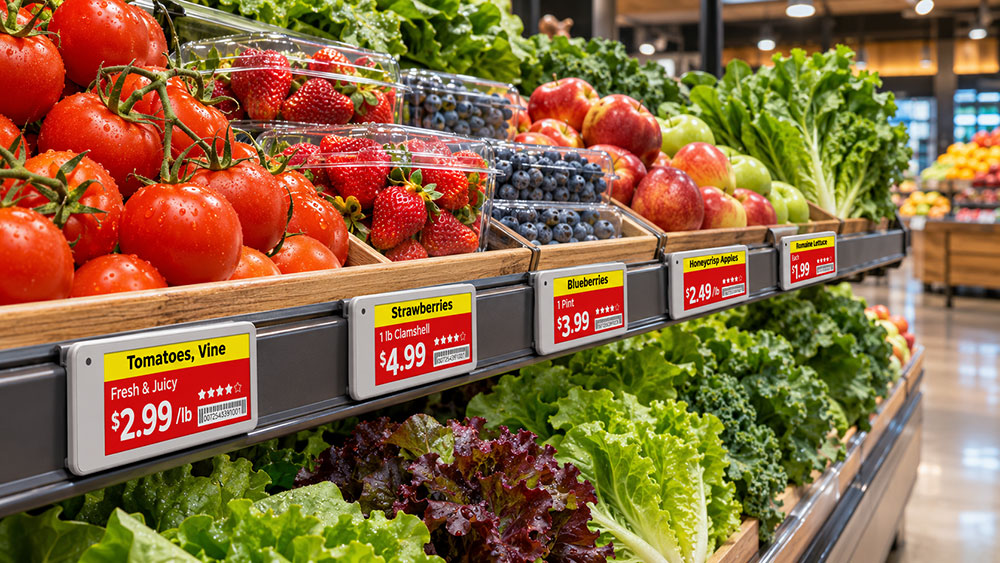
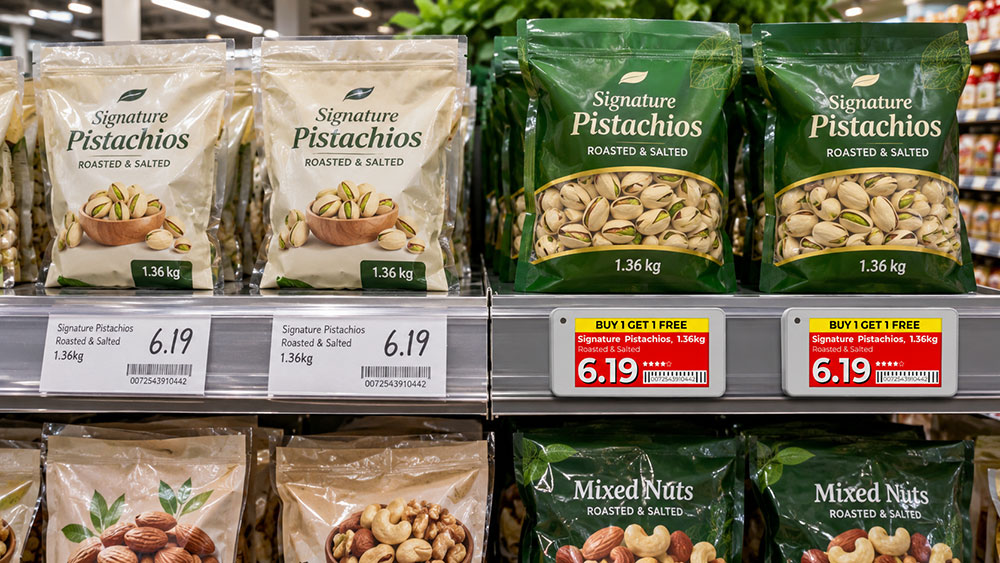
Understanding how ESL systems work helps retailers see how pricing software, wireless base stations, and electronic shelf labels operate together. If you have walked through a supermarket and noticed small e-paper price tags that change without anyone touching them, you have seen an electronic shelf label (ESL) system at work.
What Is an ESL System?
An ESL system is a network of battery-powered e-paper displays, wireless access points and management software that together replace paper price tags. The labels are not standalone screens. Each one is a connected device with a unique hardware ID that is mapped to a shelf position and a product SKU.
New to the topic? Start with our overview of what electronic shelf labels are and how to use them.
How ESL Systems Work: 5 Core Components
1. ESL Tags (the Labels)
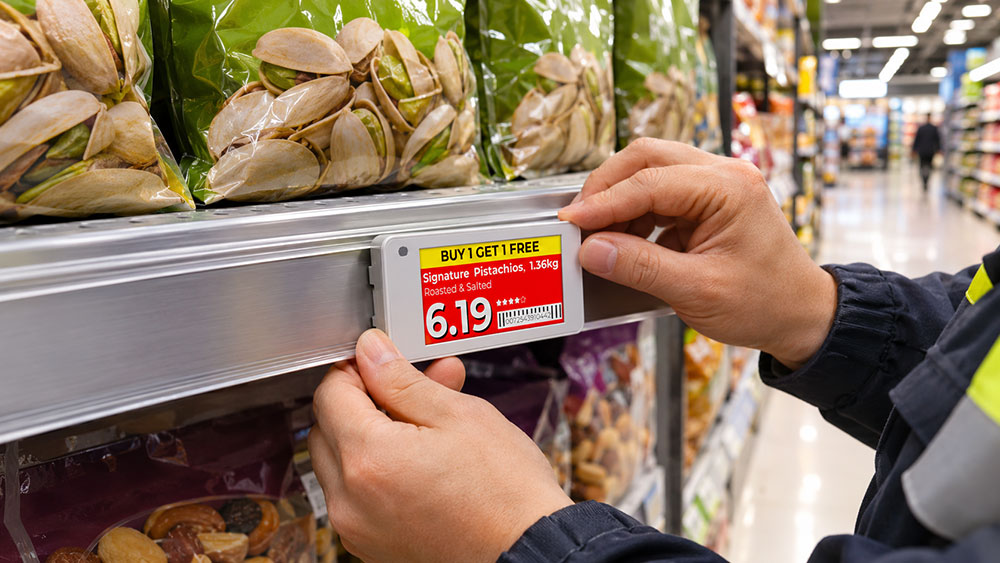
Electronic shelf labels are battery-powered digital displays installed along retail shelf edges. They typically use E-Ink technology to show product names, prices, barcodes, and promotional information. Screen sizes, supported colors, and available functions vary by manufacturer and product model. Retailers can select suitable labels based on their store environment, display requirements, and operational needs.
E-paper is the key to the whole design. It holds its image without power and only draws energy when the content changes or when the label talks to the network. That is why labels can run for years on a small battery.
2. Access Points (Base Stations)
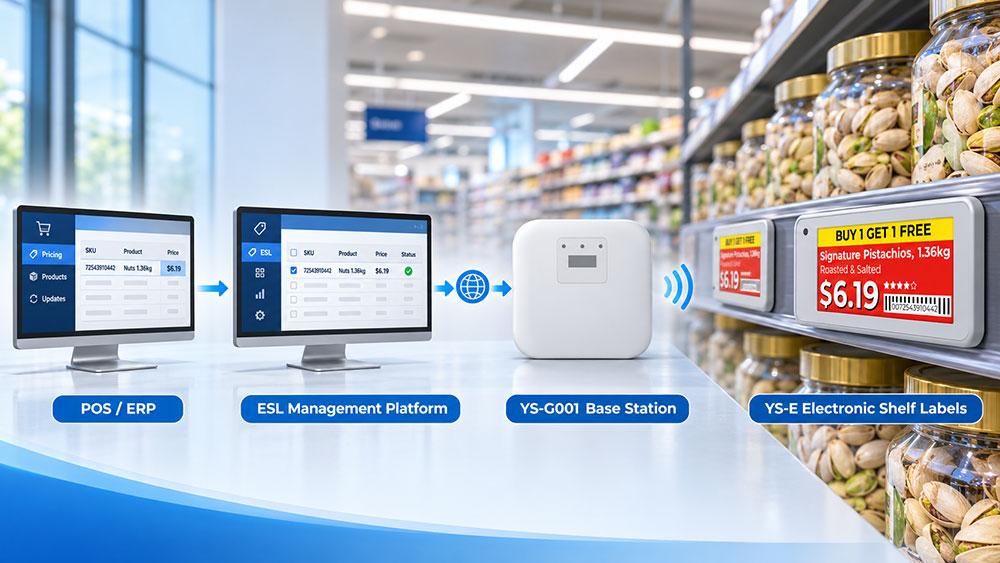
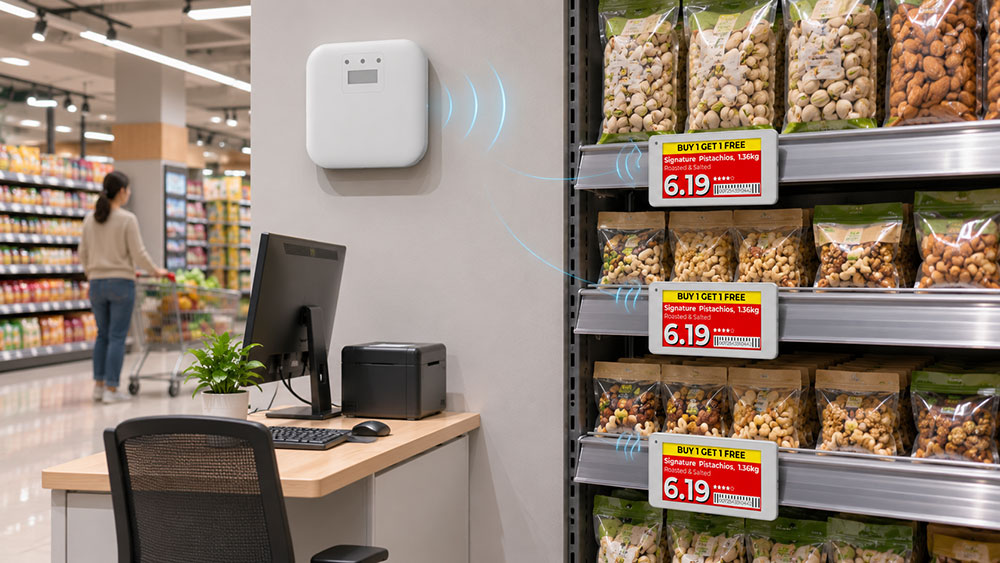
Wireless base stations act as communication bridges between the ESL management system and electronic shelf labels. They transmit pricing and product information to compatible labels through supported wireless communication protocols. The communication range and performance depend on the base station model, store layout, installation environment, and potential signal interference. A site survey is recommended before large-scale deployment.
3. Store Server or Edge Layer
Depending on the system architecture, an ESL solution may use a local server or edge device to support communication between the management platform and electronic shelf labels. The specific functions and deployment requirements depend on the system configuration and integration needs.
4. Central Management Software
This is where pricing rules, promotions and label content are managed. It can run on-premise or as a cloud service across hundreds of stores, and it connects to your ERP, POS and inventory systems.
5. Integration Layer
Middleware links the ESL platform to your existing pricing and inventory tools. Weak integration is a common cause of delays and mismatches between the shelf price and the register price, so it deserves as much attention as the hardware.
Standardized product identification also supports reliable data exchange between retail systems. GS1 standards provide a framework for identifying products through barcodes and GTINs.
How an ESL Price Update Works, Step by Step
Here is the typical journey of a single price change:
1、A price is changed in the source system. A pricing manager updates the price in the ERP or pricing tool.
2、The integration layer detects the change. It picks it up through a real-time API call or a scheduled batch sync and turns it into a label update instruction.
3、The central platform routes it. The instruction is sent to the relevant store server.
4、The store server queues and schedules it. It sends the update over the in-store wireless network within its communication cycle.
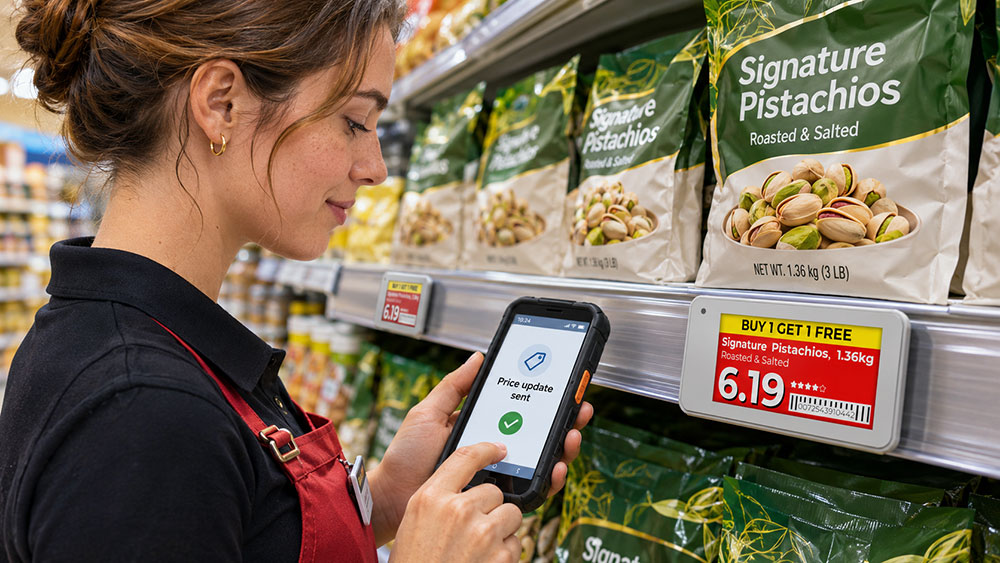
5、The label refreshes its screen. The e-paper display updates and the label sends an acknowledgment back along the same path.
6、The system confirms success. Staff can see which labels updated and which need attention.
What Wireless Technologies Do ESL Systems Use?
There is no single standard, and the choice affects range, battery life and vendor flexibility. Minew’s overview of ESL architecture notes that labels connect over 2.4GHz, sub-GHz or Bluetooth Low Energy (BLE).
| Technology | Strengths | Trade-offs |
| Bluetooth Low Energy (BLE) | Low power, mesh networking, works well in crowded stores | Fewer drawbacks reported, but depends on vendor implementation |
| Zigbee | Strong mesh coverage across large or multi-floor stores, good interference handling | Needs specific gateways |
| Wi-Fi | Fast data speeds for frequent updates | Higher power draw, may need extra access points |
| Sub-GHz / proprietary RF | Can penetrate shelving well and be tuned for low power or security | Often supports fewer devices per access point; can tie you to one vendor |
How Long Do ESL Batteries Last?
Because update frequency drives battery use, battery life is quoted under specific conditions:
1、Industry-average coin-battery ESLs last roughly 3 to 6 years.
2、Some premium e-paper models claim up to 10 years at about two updates per day.
3、Signal strength and temperature also affect battery life.
To get the most from your batteries, schedule updates instead of sending frequent unplanned refreshes. For a full breakdown, see our article on electronic shelf label lifespan and cost.
Beyond Price Display: Other Functions of ESL Systems
Because labels are connected and bound to a SKU, they can do more than show a number:
1、LED flash for picking and replenishment: a flashing light helps staff find a product on the shelf. Walmart uses this to help associates locate items for online orders.
2、Promotions and markdowns: change prices for hundreds of items at once, such as near-expiry fresh food.
3、Stock and data display: show product details, stock information or QR codes.
Why Understanding the System Matters Before You Buy
Knowing how the pieces fit together helps you ask better questions when you evaluate vendors:
1、Which wireless protocol is used, and is it proprietary?
2、How many labels can one access point serve in my layout?
3、How does the software connect to my POS and ERP?
4、What happens to labels if the internet connection fails?
5、What battery life is guaranteed at my update frequency?
Market momentum suggests these questions are becoming common. One forecast values the global ESL market at about USD 1.86 billion in 2026, growing to roughly USD 5.35 billion by 2033, a compound annual growth rate of about 16.3%.
Frequently Asked Questions About How ESL Systems Work
How do electronic shelf labels get their data?
Each label receives updates wirelessly from a nearby access point. The access point gets instructions from the store server, which in turn gets them from the central management software connected to your POS or ERP.
Do electronic shelf labels need Wi-Fi?
Not necessarily. Many systems use BLE, Zigbee, sub-GHz or proprietary radio between the access points and the labels. The access points themselves need power and a network connection to the back end.
How fast can an ESL update a price?
Vendors describe updates as near-instant, and Walmart reports changes that once took days can be done in minutes. Actual speed depends on label count, protocol and network design.
What happens if the internet goes down?
Systems with a local store server can keep operating, because that node queues updates and holds each label’s state until the connection returns.
Why do ESLs use e-paper instead of LCD?
E-paper only uses power when the image changes, which allows multi-year battery life and readability in bright light.
Can ESLs connect to my existing POS system?
Most professional platforms integrate with common POS, ERP and inventory systems, either through real-time APIs or scheduled syncs. Confirm compatibility with your vendor.
How are ESL labels linked to products?
Each label is bound to a SKU, usually by scanning the label’s ID and the product barcode. Our installation guide covers this step.
Conclusion
An ESL system is more than a display: it is a chain linking your pricing software, a store server, ceiling access points and battery-powered e-paper labels that confirm every update. Understanding that chain, and especially the wireless protocol and integration layer, will help you choose a system that fits your store and lasts for years. Want help scoping your project? Contact us for an ESL consultation.