Electronic Shelf Labels for Supermarkets: Benefits, Costs and How to Roll Them Out
Explore 5 benefits of electronic shelf labels for supermarkets, including labor savings, accurate pricing, faster promotions, installation, and ROI.
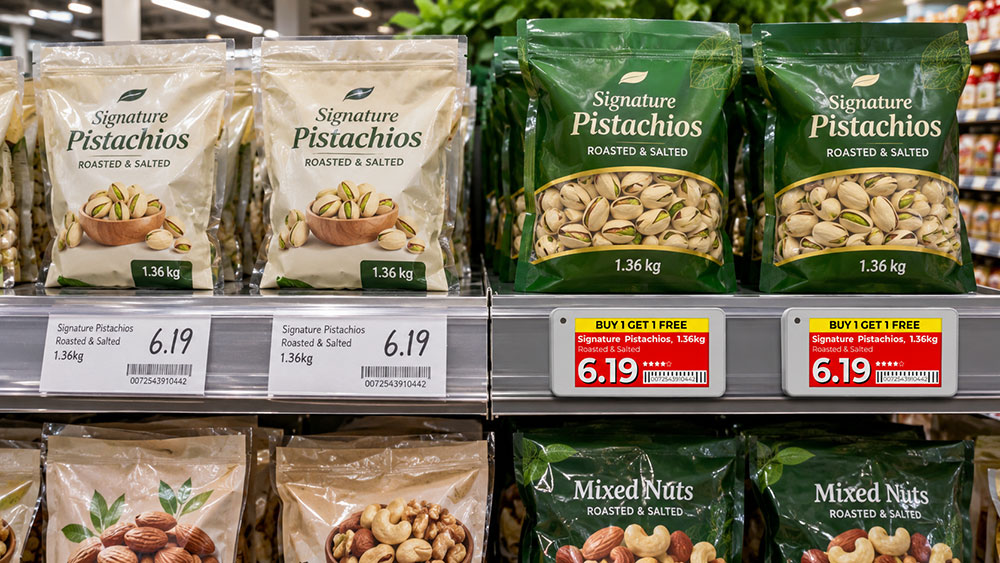
Electronic shelf labels for supermarkets help retailers simplify price updates, reduce manual labor, and improve pricing accuracy. With thousands of products and frequent promotional changes, supermarkets need efficient ways to manage shelf prices. This guide explores five key ESL benefits, implementation costs, ROI, and practical rollout considerations.
Why Supermarkets Are the Biggest ESL Market
Supermarkets are the natural home for ESLs because three conditions meet in one building: a huge number of SKUs, frequent promotions, and tight margins where a pricing error is costly. Fresh food adds another pressure, because prices on perishables change as sell-by dates approach.
ESL adoption varies by region, retailer size, and market conditions. While electronic shelf labels are increasingly used by large retail chains, adoption rates differ across countries and store formats. In the US, Walmart is changing that: it has said digital shelf labels will be in all of its roughly 4,600 US stores by the end of 2026.
If you are new to the technology, start with our overview of what electronic shelf labels are and how ESL systems work.
Key Benefits of ESLs in a Supermarket
1. Labor Savings on Price Changes
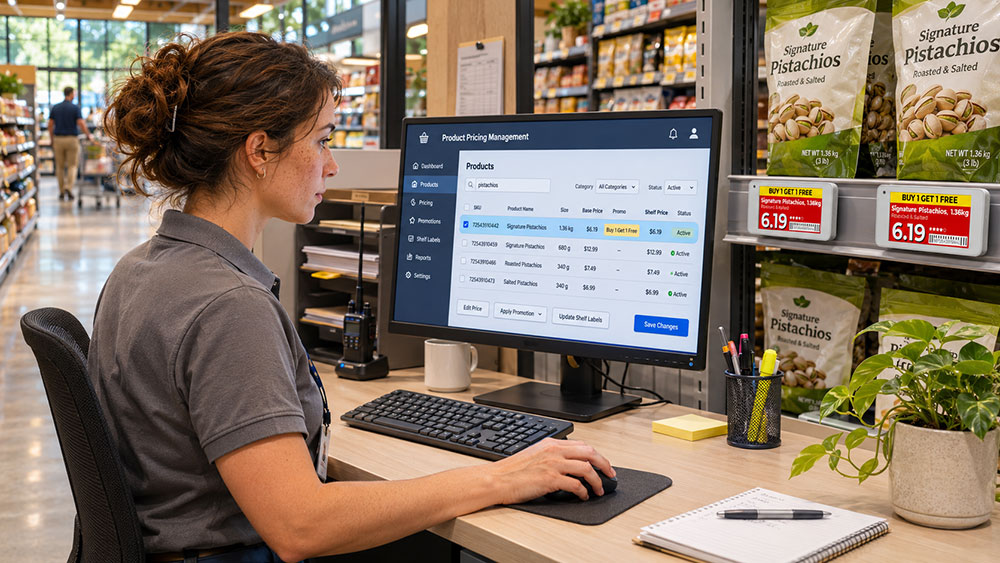
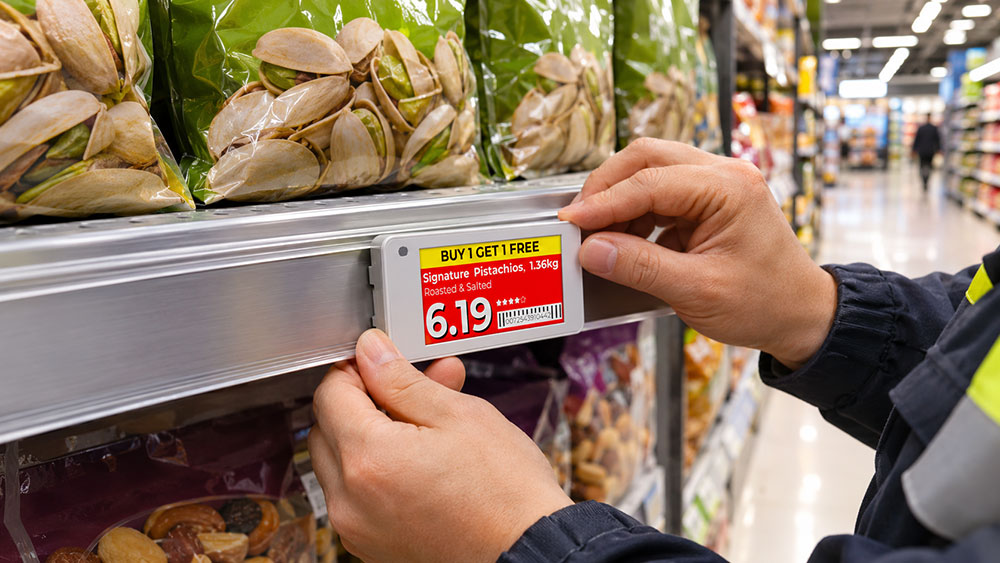
Paper tag changes tie up staff for hours every week. Real results from published case studies:
- Walmart case study: a supercenter with 120,000+ products used to spend about two days on manual price updates; the same job now takes minutes through a mobile app.
- East of England Co-op (UK): estimated time spent maintaining paper labels fell by about 70%, and store printing costs fell by 50%.
- Jempson’s (UK): the independent retailer replaced 25,000 paper tags across five stores and reported an 80% cut in staff time spent on pricing updates.
2. Shelf and Register Prices That Match
When shelf prices and checkout prices differ, shoppers complain and queues grow. Jempson’s reported a 100% reduction in pricing errors after connecting its ESLs to its core price management system. This figure comes from the retailer through trade press, so treat it as a best case and measure your own baseline.
3. Faster Promotions and Markdowns
Prices update across the store in minutes, which makes it practical to run short promotions and mark down fresh products near expiry. Done well, this can reduce waste, though results depend on your markdown rules.
4. Better Online Order Picking
Many supermarkets now pick click-and-collect orders from the shop floor. ESLs with LED flash lights help pickers find items quickly, a feature Walmart highlights for its delivery and pickup workflows.
5. Less Paper Waste
Removing weekly label printing reduces paper and ink use, which supports sustainability reporting.
Where in the Supermarket ESLs Work Best
Ambient Grocery Aisles
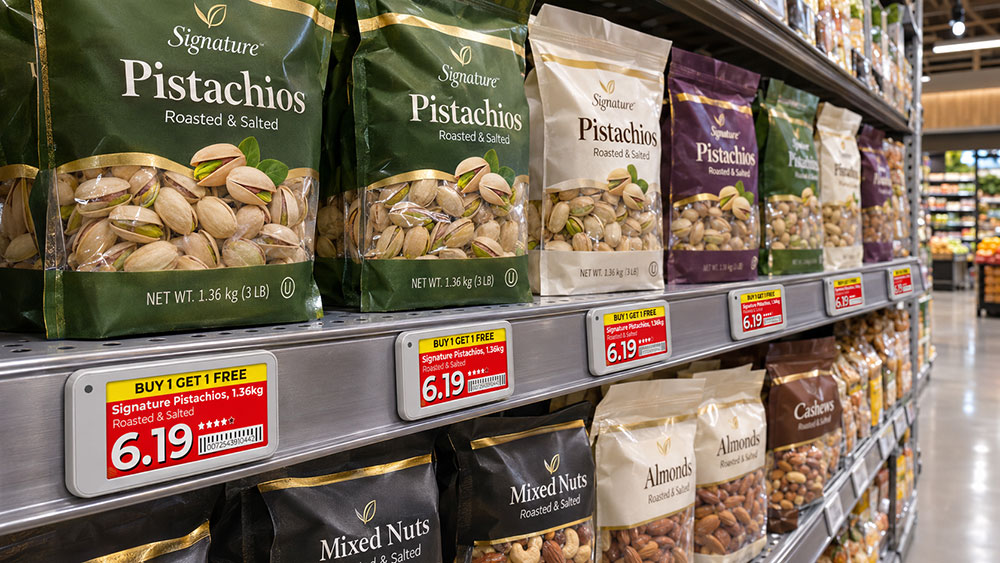
The largest share of labels sits here. Standard e-paper labels on gondola shelving are the easiest and cheapest starting point.
Fresh Produce, Meat and Dairy
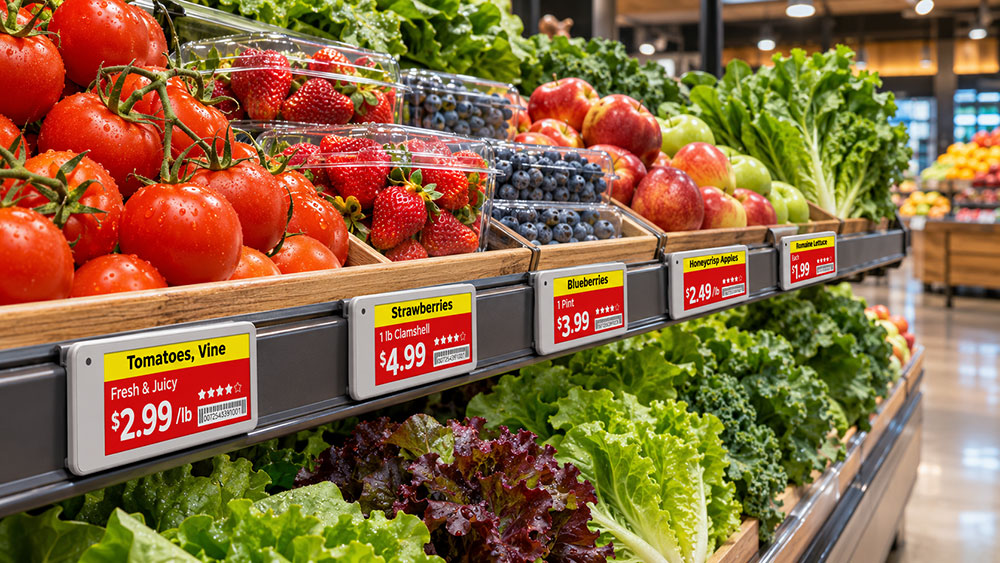
Frequent price changes make fresh departments a strong use case. Choose labels and mounts rated for refrigerated, humid conditions, and use sealed or vented mounts in coolers.
Frozen Foods and Cooler Doors
Cold environments affect batteries and signal, so ask suppliers for tested low-temperature performance. Existing glass cooler doors can often be retrofitted with the right fixings.
Endcaps and Promotional Areas
These areas change most often, so ESLs here deliver quick payback. Use impact-resistant mounts where carts strike.
Back-of-Store and Backroom
Some retailers label backroom locations to speed up replenishment.
How Much Do ESLs Cost for a Supermarket?
Hardware is priced per label, and a supermarket needs thousands. A KUTV report puts label cost at $5 to $20 each, and market estimates for a 10,000+ label supermarket put total investment around $80,000 to $200,000 once base stations, software and installation are included. Our ESL cost per label guide gives the full breakdown. Treat these as planning ranges and request written quotes for your store.
ROI and Payback for Supermarkets
An ISN Magazine case study article reports typical payback benchmarks of:
| Store type | Reported payback |
| High-volume supermarkets | 3 to 12 months |
| Mid-size grocery stores | 12 to 18 months |
| Large chains (system-wide) | 18 to 36 months |
These figures are third-party estimates provided for general reference only and should not be considered guaranteed payback periods. Actual ROI depends on store size, the number of labels deployed, price update frequency, labor costs, system integration, and installation expenses. Retailers should evaluate their own operating conditions before estimating potential returns. See our comparison of ESL vs traditional paper price tags for a deeper look.
Installation: How Long Does a Supermarket Rollout Take?
Rollout speed is better than most operators expect. A Swedish grocery store, Matvärlden, installed about 12,000 labels in roughly six hours overnight with Pricer and installation partner Strongpoint, and opened normally the next morning. Preparation is what makes this possible: a site survey, the right rails for each fixture type, and a clear process for linking labels to SKUs. Read our ESL installation guide for the full process.
Concerns Supermarkets Should Address
Will Customers Distrust Dynamic Pricing?
Shoppers often fear surge pricing. A 2025 study by researchers at the University of Texas at Austin, UC San Diego and Northwestern University analyzed price data from a grocery chain that adopted digital labels in October 2022 and found virtually no surge pricing. Even so, some US state lawmakers have proposed restrictions, so follow local rules and be transparent in your messaging.
Is the Integration Hard?
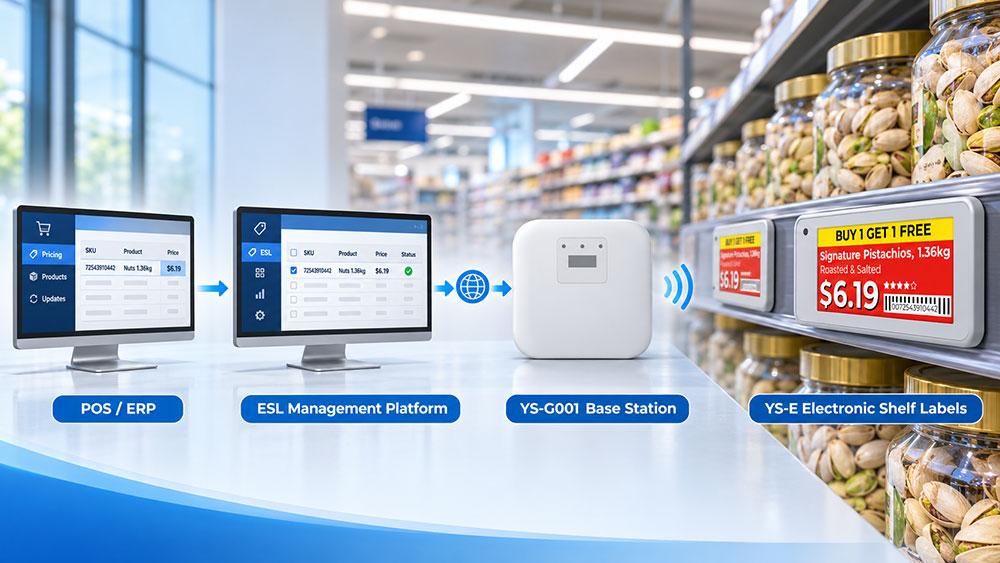
Your ESL software must connect to your POS and pricing system. Weak integration is a leading cause of mismatches, so test it in a pilot.
What About Battery Life?
Electronic shelf label battery life varies depending on the product model, update frequency, operating temperature, and usage conditions. Some ESL models are designed for multi-year operation, but actual battery performance may differ across retail environments. Retailers should refer to the manufacturer’s specifications when planning long-term maintenance costs.
FAQ: Electronic Shelf Labels for Supermarkets
Are electronic shelf labels worth it for supermarkets?
For stores with large ranges and frequent price changes, published case studies show meaningful labor and accuracy gains, with payback typically in one to three years.
How many labels does a supermarket need?
Roughly one per product facing, so a mid-size supermarket often needs 10,000 or more.
Can ESLs work in freezers and chillers?
Yes, with labels and mounts designed for low temperatures and condensation. Confirm tested performance with your supplier.
Can I install ESLs while the store is open?
Many supermarkets install overnight, though aisle-by-aisle installation is also possible.
Do ESLs cause higher prices?
One academic study of a grocery chain found virtually no surge pricing after adoption. Pricing strategy remains the retailer’s choice.
Can I pilot ESLs in one department first?
Yes. Many retailers pilot in one aisle, department or store before a full rollout.
How do ESLs connect to my POS?
Through real-time APIs or scheduled syncs between the ESL platform and your pricing system. Confirm compatibility before buying.
Conclusion
For supermarkets, the case for ESLs rests on labor, price accuracy and promotion speed, and the evidence from Walmart, East of England Co-op and Jempson’s shows these gains in practice. Start by measuring how many hours your team spends on price changes and how often shelf and till prices disagree, then pilot ESLs in your highest-change departments. Want help scoping a supermarket rollout? Contact us for an ESL consultation.Electronic shelf labels for supermarkets can help retailers simplify pricing operations, reduce manual work, and improve store efficiency.