How Much Do Electronic Shelf Labels Cost Per Label? (2026 Pricing Guide)
Learn what affects electronic shelf label pricing, from hardware and software to installation and maintenance, and plan your retail ESL budget.
If you’re comparing quotes from ESL vendors or planning a store-wide rollout, understanding electronic shelf label cost is essential. Electronic shelf labels typically cost between $6 and $25 per label, depending on screen size, display technology, and connectivity. However, the device price is only part of the total cost of ownership — hardware, software, installation, and maintenance all affect what a retailer actually pays.
This guide breaks down electronic shelf label (ESL) pricing in detail, explains what drives the cost up or down, and walks through real total-project budgets so you can plan an accurate rollout — whether you’re outfitting a 500-square-foot boutique or a 40,000-square-foot supermarket.
What Is an Electronic Shelf Label?
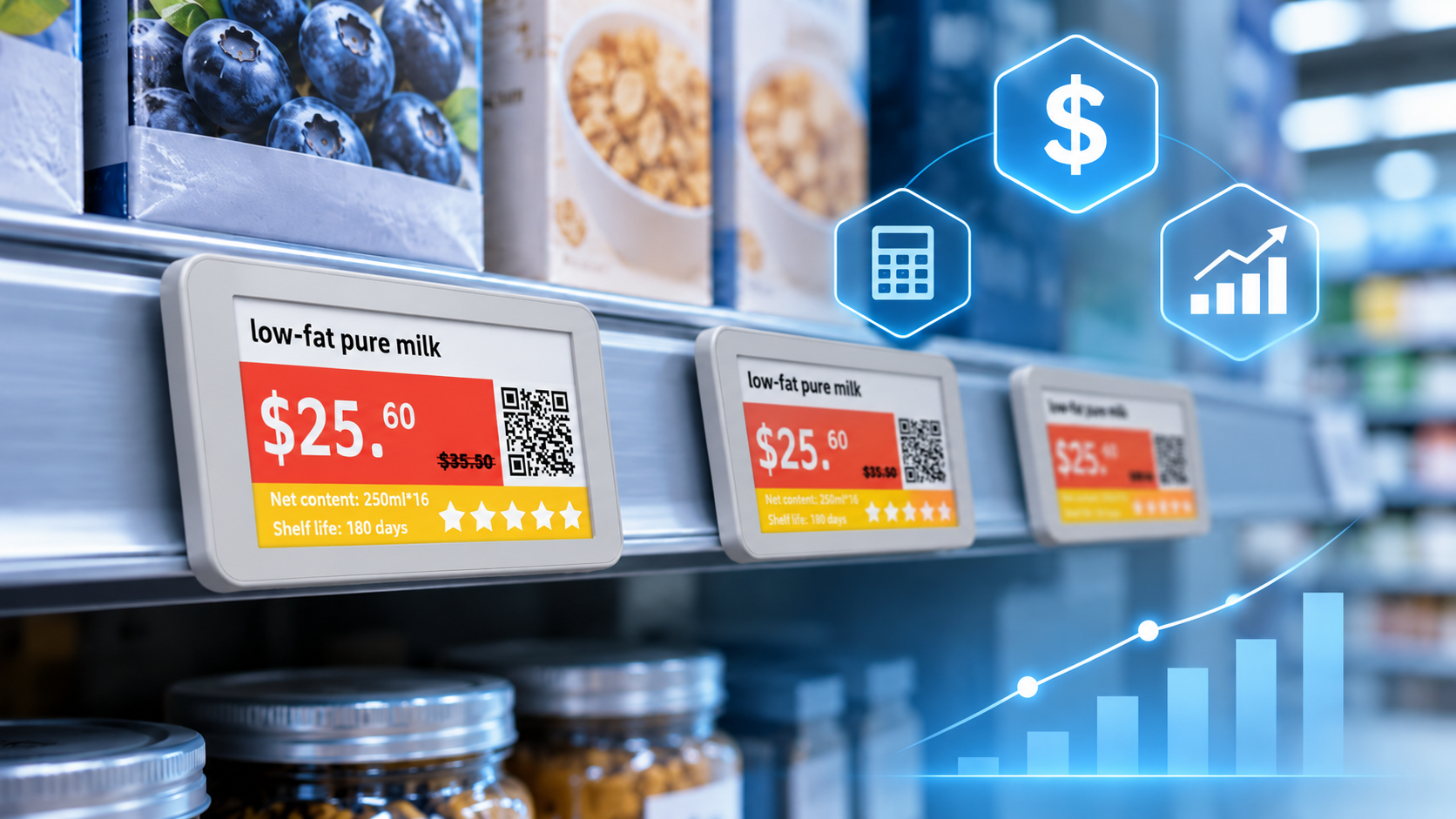
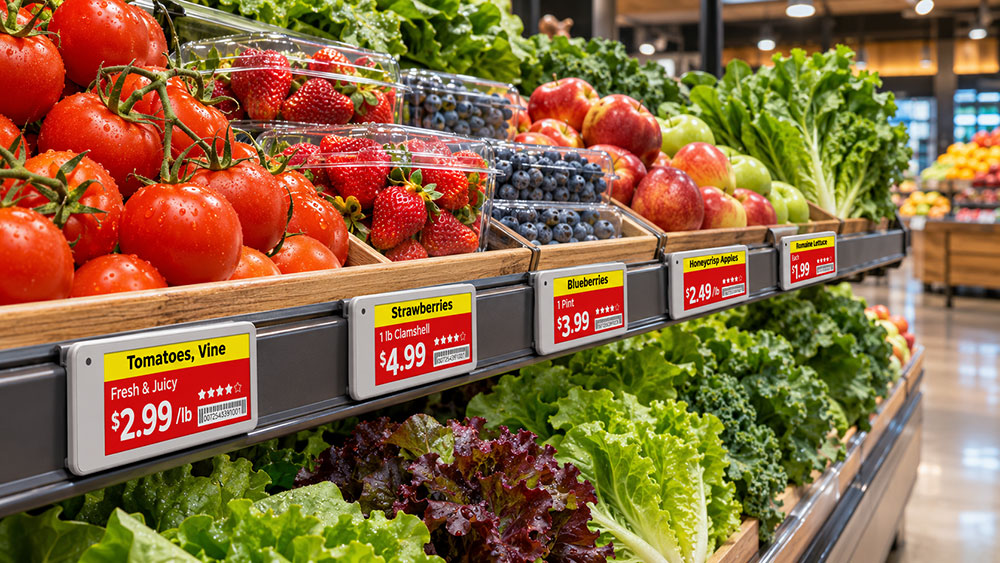
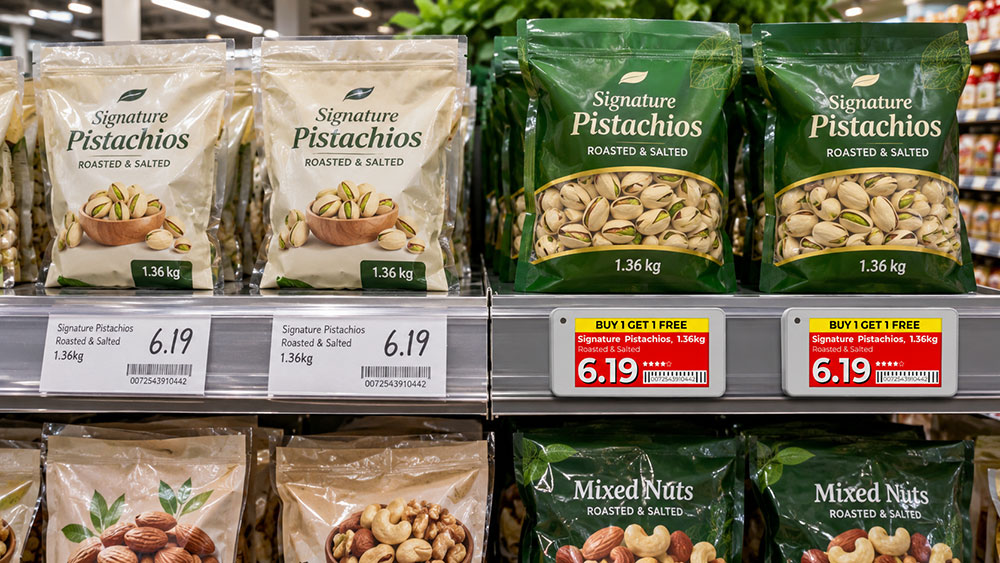
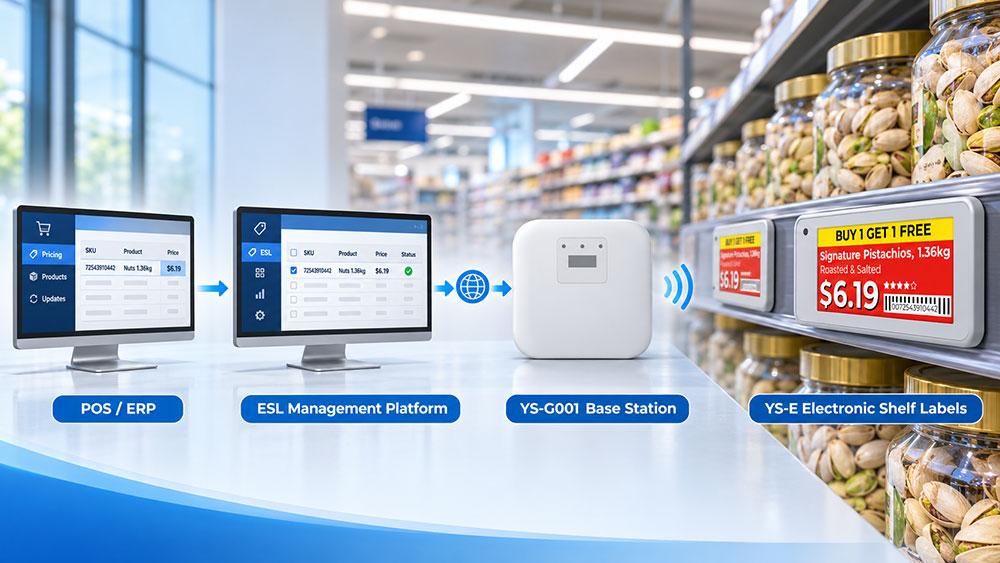
An electronic shelf label (ESL), also called a digital shelf label (DSL) or digital price tag, is a small battery-powered display mounted on a store shelf edge that shows a product’s price, barcode, and promotional information. Instead of an employee reprinting and manually swapping a paper tag, the price is pushed wirelessly from a central system to every label in the store within seconds. Most modern ESLs use low-power e-paper (e-ink) displays, the same technology found in e-readers, because they use almost no power and remain visible even in bright store lighting.
Retailers adopt ESLs to eliminate pricing errors between the shelf and the register, cut the labor hours spent on manual price changes, and enable faster promotions. Related reading: see our guide on how electronic shelf label systems work and choosing between e-ink and LCD display screen.
Electronic Shelf Label Cost Per Label: Quick Answer
For anyone who just wants the number: a single electronic shelf label unit generally costs $6 to $25, with most grocery and general-merchandise retailers paying somewhere in the $8–$15 range for standard black-and-white or two-color e-ink labels. Color e-ink labels, larger displays, and labels with NFC or infrared sensors for “find my item” features sit at the higher end of that range.
That per-label figure covers the device itself. It does not include the base station, software subscription, mounting rails, or installation labor — all of which are necessary to actually run an ESL system. We break those out below.
Full Cost Breakdown Table
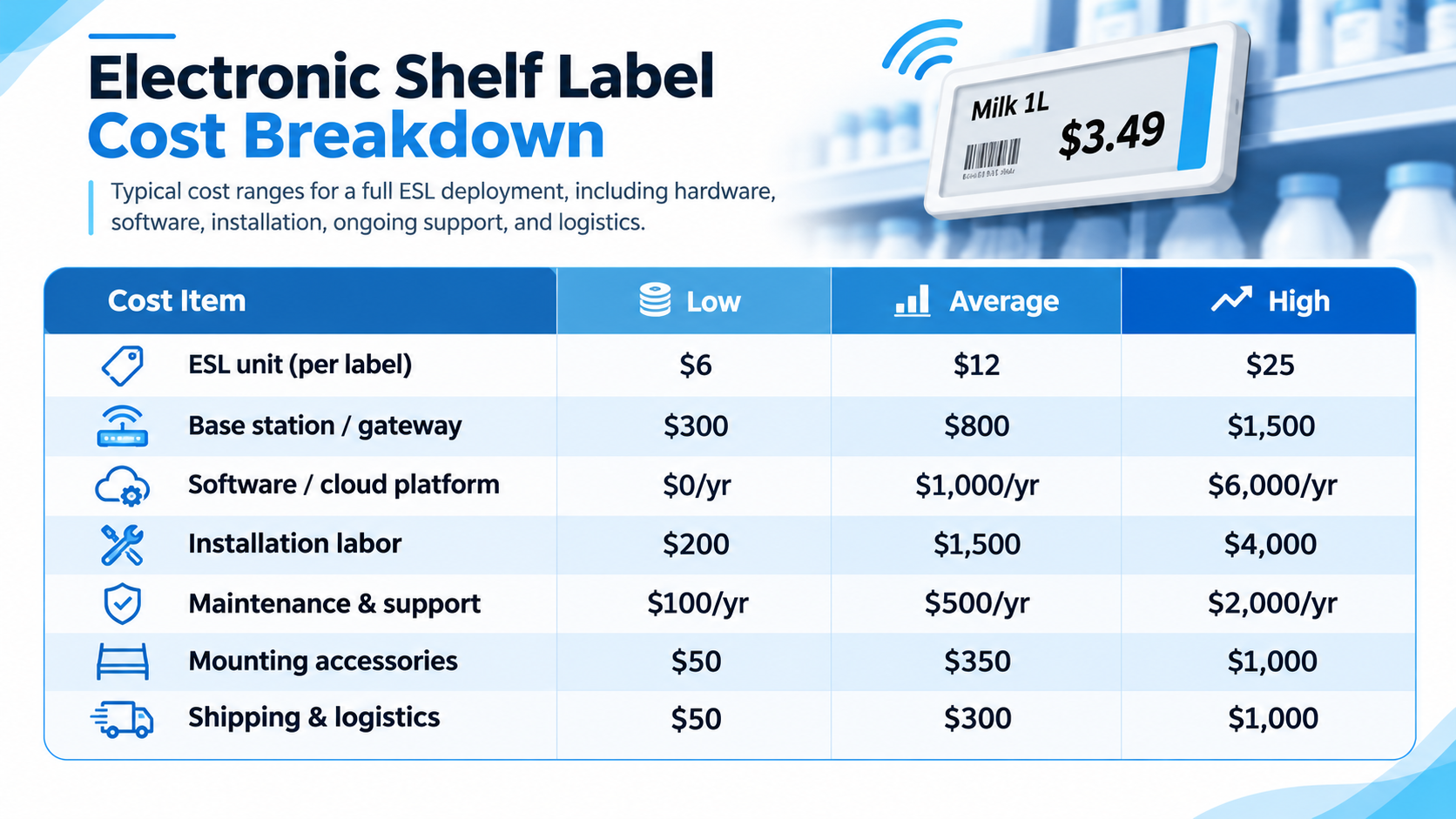
| Cost Item | Low | Average | High | What It Covers |
| ESL unit (per label) | $6 | $12 | $25 | The physical e-ink or LCD display and battery |
| Base station / gateway | $300 | $800 | $1,500 | Central hub that pushes price updates to labels |
| Software / cloud platform | $0/yr | $1,000/yr | $6,000/yr | Price management dashboard, POS integration |
| Installation labor | $200 | $1,500 | $4,000 | Mounting rails, label placement, system setup |
| Maintenance & support | $100/yr | $500/yr | $2,000/yr | Firmware updates, battery/label replacement |
| Mounting accessories | $50 | $350 | $1,000 | Rails, clips, adapters for different shelf types |
| Shipping & logistics | $50 | $300 | $1,000 | Freight to the store or distribution center |
What Factors Affect Electronic Shelf Label Cost?
Several factors explain why one retailer pays $7 per label and another pays $22 for what looks like a similar product:
- Display size and color. A small 2.1-inch single-color label costs far less than a 7.5-inch full-color e-ink label used for produce or apparel signage with images.
- Communication technology. Labels that use simple radio frequency (RF) tend to be cheaper than labels using Bluetooth Low Energy (BLE) or Near Field Communication (NFC), which support faster refresh rates and richer in-store interactions like “locate item” flashing lights.
- Battery life and refresh rate.Labels designed to refresh prices multiple times a day (for dynamic or surge pricing) typically use more advanced, costlier chipsets than labels that update once a week.
- Purchase volume.Enterprise retailers ordering tens of thousands of units negotiate steep per-unit discounts compared to a small shop buying a few hundred.
- Software and integration needs.A cloud-based platform that syncs with your existing point-of-sale and inventory system adds a recurring subscription cost but usually saves labor over time.
- Installation complexity.Retrofitting old wooden or metal shelving with new mounting rails costs more than installing labels in shelving designed to accept them.
Total Project Cost by Store Size
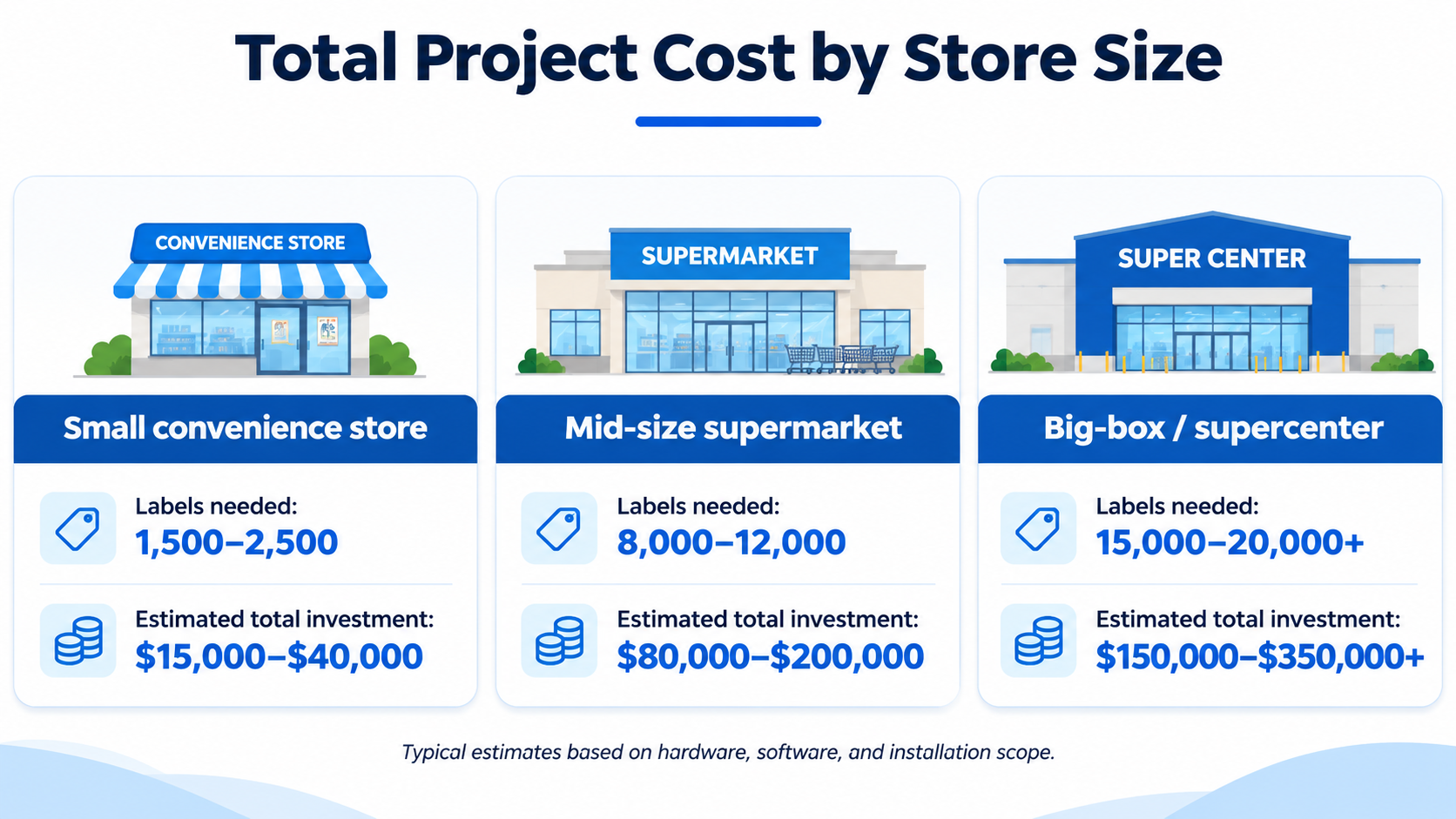
Because per-label pricing alone doesn’t tell the full story, here’s what full deployments tend to cost in practice:
| Store Type | Labels Needed | Estimated Total Investment |
| Small convenience store | 1,500–2,500 | $15,000 – $40,000 |
| Mid-size supermarket | 8,000–12,000 | $80,000 – $200,000 |
| Big-box / supercenter | 15,000–20,000+ | $150,000 – $350,000+ |
Most retailers spread this investment across the labels’ multi-year lifespan (typically 5–10 years per device), which brings the effective annualized cost down significantly when factored alongside labor savings.
Real-World Case Study: Walmart’s Nationwide Rollout
Walmart offers one of the most closely watched examples of ESL adoption at scale. After piloting digital shelf labels at a single supercenter in Grapevine, Texas, Walmart expanded the program to roughly 2,300 stores by 2026 and then extended its contract with supplier VusionGroup to bring digital shelf labels to all 4,600 U.S. stores by the end of 2026, in a deal reported to be worth around €1 billion.
According to Walmart’s official announcement, approximately 2,300 U.S. stores were using digital shelf labels as of March 2026.
The results reported by Walmart illustrate why the investment can pay off even at that scale: a price update that used to take store associates roughly two days to complete manually across a supercenter carrying more than 120,000 products can now be pushed to every shelf in a matter of minutes through a mobile app. One electronics department lead in Ohio reported that digital labels cut the time she spent on pricing tasks by around 75%, time she was able to redirect to helping customers on the floor. The labels also integrate with order-picking workflows — a flashing light on the shelf edge helps delivery associates locate items faster.
This kind of case study is a useful benchmark for smaller retailers: even without Walmart’s negotiating power, the core value proposition — labor savings, pricing accuracy, and faster promotions — scales down to a single-store deployment.
ESL vs. Paper Labels: Is It Worth the Cost?
Paper labels cost pennies to print, so on a pure sticker-price basis, ESLs will always look more expensive upfront. The comparison that matters is total cost of ownership over several years:
- Labor:Manual price changes across a large store can consume dozens of staff-hours per week; ESL systems cut that to minutes.
- Pricing errors:Mismatches between the shelf price and register price create customer complaints, refunds, and in some regions regulatory penalties. Centralized ESL pricing removes that risk.
- Promotion speed: Running a flash sale or adjusting prices for perishables near their sell-by date is far easier when hundreds of prices can update simultaneously.
- Sustainability:Eliminating recurring paper and ink printing supports retailers’ broader environmental goals.
Most mid-size and large retailers who adopt ESLs report reaching payback within roughly 2–4 years, depending on store size and how much manual labor the system displaces. Smaller independent retailers should evaluate deployment requirements and long-term operating costs carefully — see our guide to electronic shelf label deployment and support.
How to Get an Accurate Quote
Because pricing depends heavily on your specific store layout and product count, the numbers above are a planning benchmark, not a substitute for vendor quotes. When requesting pricing from ESL suppliers, ask for:
1、A per-label unit price broken out separately from software and hardware bundles.
2、Annual software/subscription fees, including any per-label monthly cloud fee.
3、Installation cost per linear foot of shelving, since layouts vary widely.
4、Warranty length and battery replacement policy for the labels.
5、Volume discount tiers if you plan to expand beyond an initial pilot.
FAQ: Electronic Shelf Label Costs
How much does one electronic shelf label cost?
A single ESL unit typically costs between $6 and $25, depending on screen size, color capability, and wireless technology. Standard black-and-white labels for grocery aisles usually fall between $8 and $15.
How much does it cost to install electronic shelf labels in an entire store?
A full rollout typically ranges from $15,000–$40,000 for a small store to $80,000–$350,000+ for a large supermarket or supercenter, once hardware, software, and installation labor are included.
Do electronic shelf labels require a monthly subscription?
Many vendors charge an annual or monthly software/cloud fee for the price-management platform, ranging from $0 for basic on-premise systems to several thousand dollars per year for cloud-hosted enterprise platforms.
How long do electronic shelf labels last?
Most e-ink ESL batteries last 5 to 10 years before needing replacement, since the displays only draw power when the price actually changes.
Are electronic shelf labels worth the cost for a small business?
For a small store with a limited number of SKUs and infrequent price changes, the labor savings may not offset the upfront investment as quickly as they would for a large retailer. A pilot deployment on a few hundred labels is a common way to test ROI before a full rollout.
What is the difference between electronic shelf labels and digital shelf labels?
The terms are generally used interchangeably in the industry. “Digital shelf label” (DSL) is simply an alternate name for the same electronic price-tag technology.