How Electronic Shelf Labels Work: 5 Retailer Workflows
Discover how electronic shelf labels work, how retailers update prices wirelessly, and the benefits of ESL systems for supermarkets and retail stores.
If you run a supermarket, convenience store, or retail chain, understanding how electronic shelf labels work can help you improve pricing accuracy and store efficiency. Electronic shelf labels (ESLs) allow retailers to update product prices wirelessly across an entire store, reducing manual label changes. This guide explains how ESL systems operate, how to use them, their benefits, battery life, costs, and retail applications.
What Is an Electronic Shelf Label?
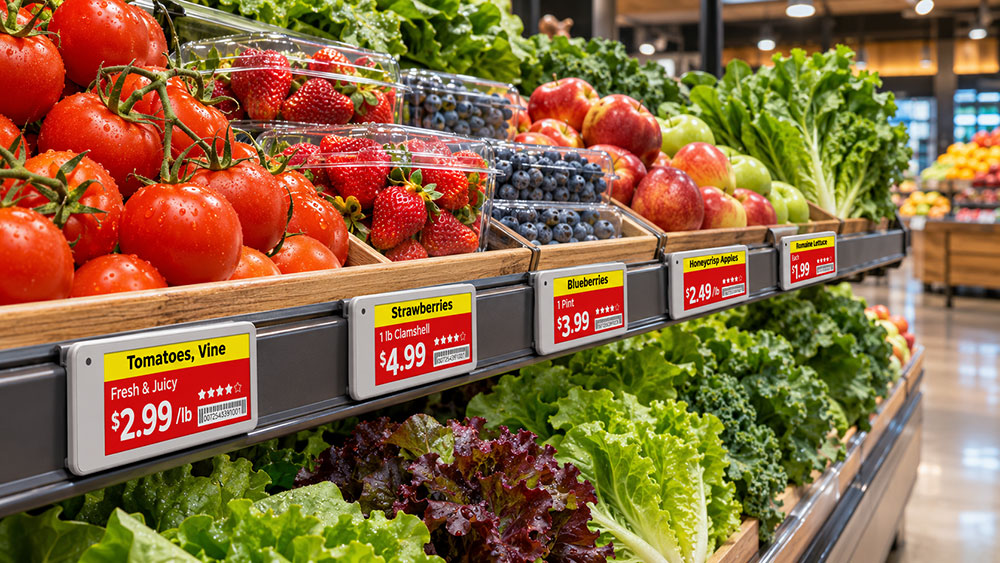
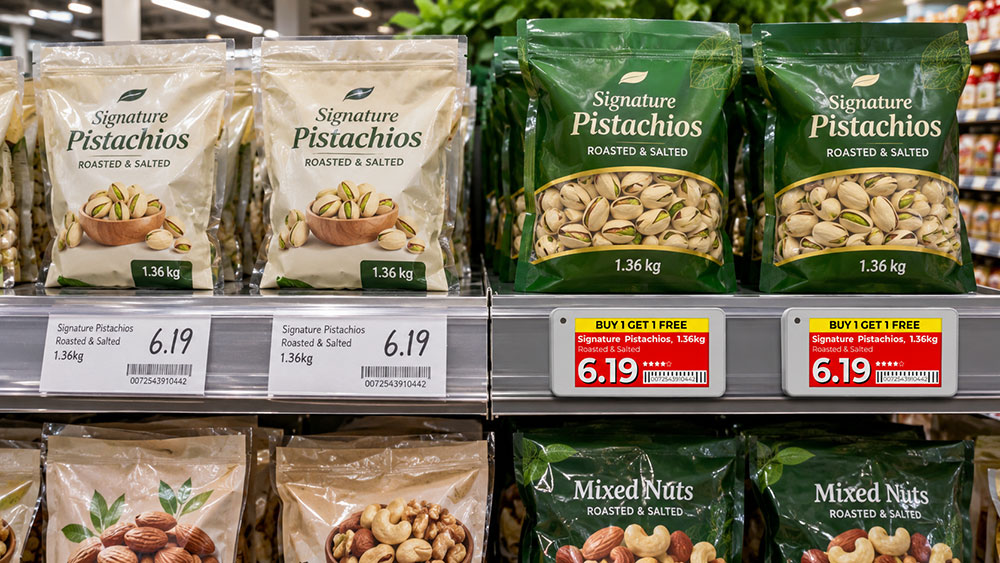
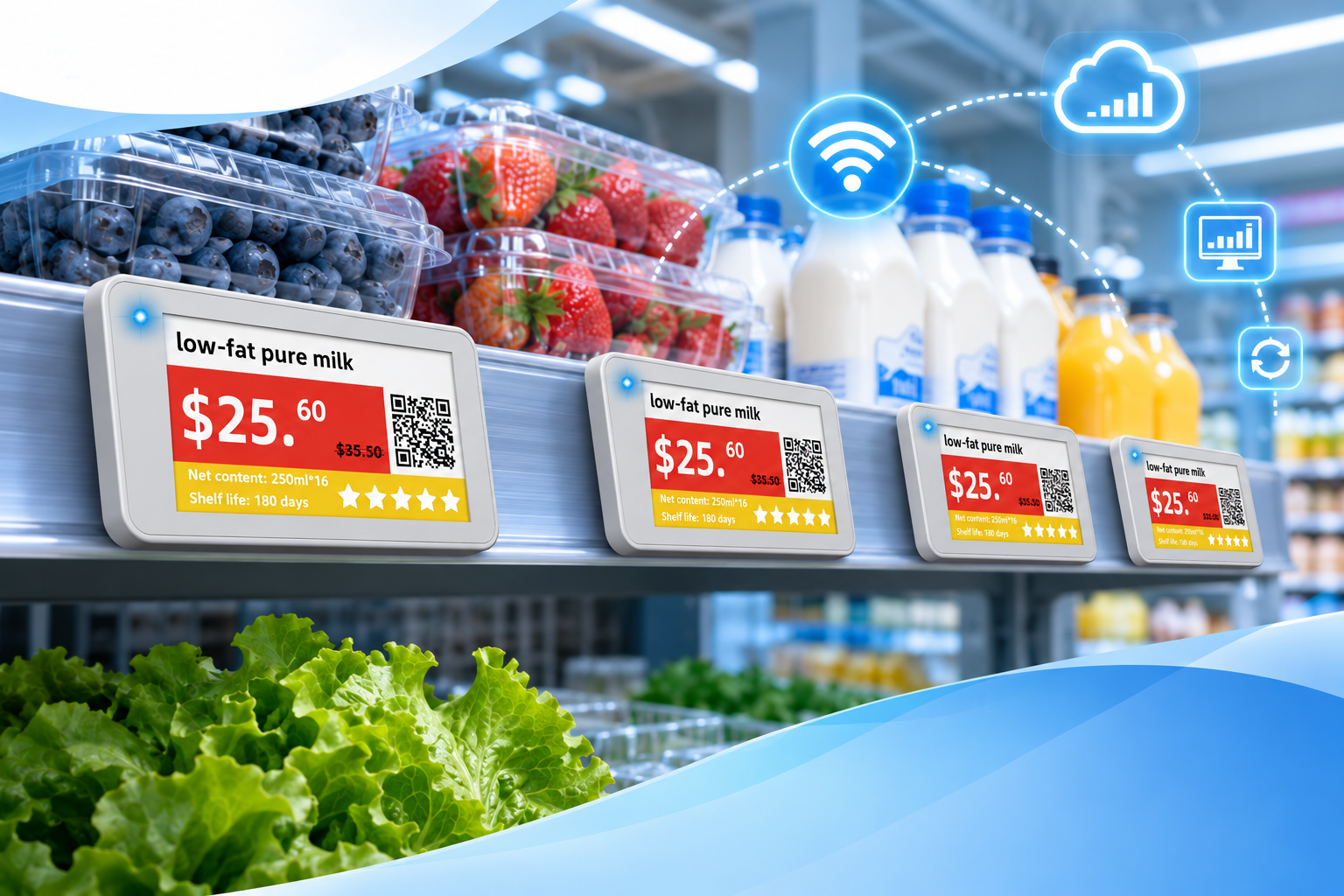
An electronic shelf label, also called a digital shelf label (DSL) or digital price tag, is a small battery-powered display mounted on the shelf edge. It shows the product’s price, barcode, and promotional information, and it replaces printed paper tags.
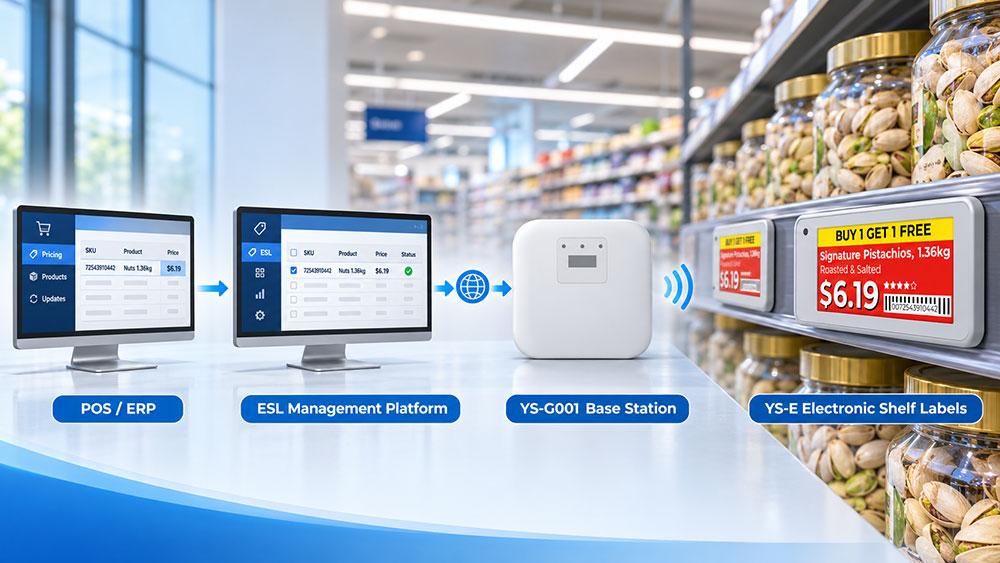
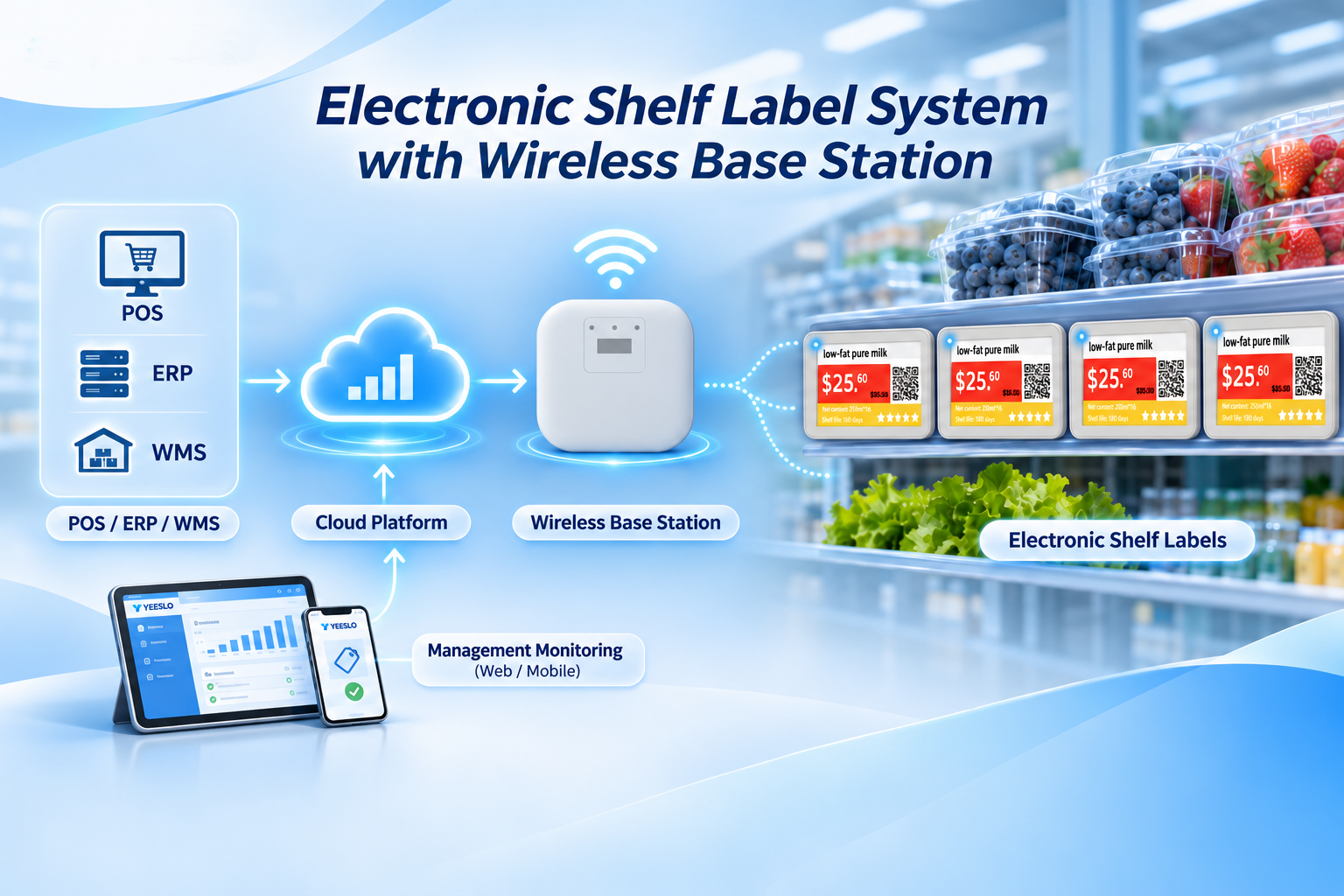
Most modern ESLs use e-paper (e-ink) displays. Like an e-reader, an e-paper screen only uses power when the content changes, so the label can hold a price for months on a tiny battery and stays readable under bright store lighting. Each label receives updates wirelessly from a central system through base stations installed in the ceiling or on shelving.
Main Components of an ESL System
Labels: the e-paper display units on the shelf.
Base stations (access points): wireless gateways that send data to the labels.
Management software: the platform where you set prices and connect to your POS and inventory systems.
For a deeper technical comparison, see our guide to e-ink vs. LCD display screen.
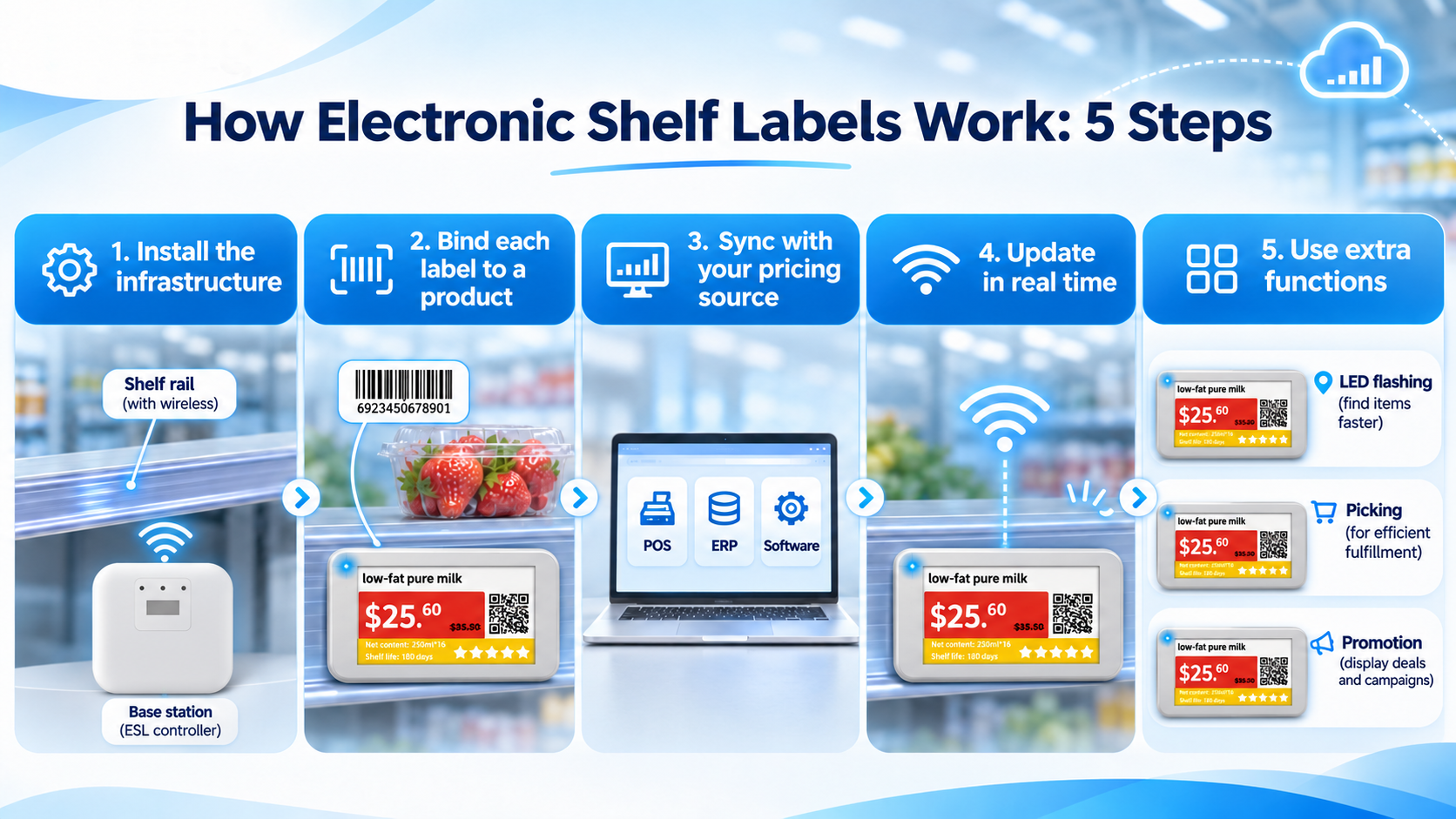
How Electronic Shelf Labels Work: 5 Steps
To understand how electronic shelf labels work in a retail store, follow these five steps from system installation to real-time price updates:
1、Install the infrastructure. Mount base stations and attach label rails or clips to your shelving.
2、Bind each label to a product. Scan the label’s code and the product barcode (SKU) so the system knows which item appears where.
3、Sync with your pricing source. The ESL software connects to your POS, ERP, or inventory system, so one price change flows through to the shelf automatically.
4、Update in real time. When a price or promotion changes in the back end, the label refreshes within seconds to minutes.
5、Use extra functions. Many labels include LED flash lights that help staff find products for restocking or help pickers locate items for online orders.
Walmart’s associates, for example, update prices through a mobile app instead of walking the store with printed tags.
Advantages of Using Electronic Shelf Labels
1. Faster, More Accurate Pricing
Paper labels invite mismatches between the shelf price and the register price, which cause customer complaints and, in some regions, regulatory penalties. ESLs keep both prices identical because they come from the same source.
2. Major Labor Savings
Walmart reports that a supercenter with more than 120,000 products used to spend roughly two days on manual price updates, which can now be completed in minutes. One Walmart team lead said ESLs cut her pricing-related work by about 70%.
3. Flexible Promotions and Dynamic Pricing
You can launch flash sales, markdown perishables near expiry, or adjust prices by time of day without printing anything.
4. Better Inventory and Omnichannel Operations
Flashing LEDs speed up order picking and replenishment, which matters as stores handle more click-and-collect orders.
5. Less Waste
Eliminating weekly paper and ink printing supports sustainability goals and reduces supply costs.
How Long Do Electronic Shelf Labels Last?
Lifespan is one of the most common buyer questions. The answer depends mainly on the battery, the display type, and how often labels update.
| Factor | Typlcal flgure |
| Industry average for coin-battery ESLs | About 3–6 years |
| High-quality electronic price tags (as claimed by the manufacturer) | Up to 10 years at roughly 1–3 updates per day |
| E-ink labels in general | Commonly 5–7 years |
| LCD-based labels | Often only 1–2 years |
How to extend ESL life: schedule price updates instead of sending frequent unplanned refreshes, keep labels away from extreme temperatures, choose models with replaceable batteries, and ask the supplier for tested battery data at your expected update frequency.
Electronic Shelf Label Cost: Complete Pricing Guide
Prices vary by size, color, wireless protocol, and order volume. Based on commonly reported 2026 market ranges, a single label typically costs about $6–$25, with standard grocery labels often falling in the $8–$15 range. The label is only part of the bill, so also budget for:
- Base stations: roughly $300–$1,500 each.
- Software or cloud subscription: from $0 to several thousand dollars per year.
- Installation labor and mounting accessories.
- Maintenance and support.
Estimated total project cost (planning ranges):
| Store type | Labels | Estimated investment |
| Small store | ~2,000 | $15,000–$40,000 |
| Supermarket | 10,000+ | $80,000–$200,000 |
Treat these as benchmarks and request written quotes. Read our full breakdown in How Much Do Electronic Shelf Labels Cost Per Label?. Because labels last years and cut labor, retailers usually judge ESLs on total cost of ownership rather than the sticker price.
Use Cases: Electronic Shelf Labels in Retail and Supermarkets
Supermarkets and hypermarkets are the biggest ESL adopters because they carry tens of thousands of SKUs and change prices constantly. Other strong fits include:
- Convenience and grocery stores: frequent promotions and fresh-food markdowns
- Pharmacies: accurate pricing and compliance for thousands of small items
- Electronics and DIY stores:high-value products where price errors are costly
- Fashion and specialty retail:clean displays with brand-consistent design
- Warehouses: location and stock labels
Case Study: Walmart
Walmart announced that digital shelf labels would reach all of its roughly 4,600 U.S. stores by the end of 2026, supplied by VusionGroup under a contract reported at around €1 billion. After a pilot in Grapevine, Texas, the company expanded in stages, citing faster price changes and easier order picking.
Market Growth
One market forecast values the ESL market at about USD 1.86 billion in 2026, growing to roughly USD 5.35 billion by 2033, a compound annual growth rate of about 16.3%. Retailers are adopting ESLs quickly, so competitors that stay on paper may fall behind on pricing speed.
Electronic Shelf Label Supplier: YEESLO
Choosing the right supplier matters as much as choosing the technology. A good ESL partner should offer reliable hardware, stable software that integrates with your POS, technical support, and clear quotes.
YEESLO is an electronic shelf label supplier serving retail stores and supermarkets. Retailers evaluating YEESLO can look at:
label sizes:1.54 inch、2.13 inch、2.66 inch、2.9 inch,3.5 inch、4.2 inch,5.8 inch,7.5 inch,10.1 inch、13.3 inch。
E-paper color:Black / White / Red / Yellow
wireless protocols offered:Bluetooth BLE 5.4 protocol
Software: Open standardized APIs to rapidly integrate core systems such as ERP, POS, and WMS.
Certifications: CE, RoHS, FCC.
Questions to Ask Any ESL Supplier
1、What is the tested battery life at my expected update frequency?
2、Which POS and ERP systems do you integrate with?
3、What are the software fees after year one?
4、What is the warranty and the failure rate on labels?
5、Can you run a pilot of a few hundred labels first?
Ready to compare options? Contact us for an ESL quote.
Frequently Asked Questions About Electronic Shelf Labels
What is an electronic shelf label?
An electronic shelf label is a battery-powered e-paper display on a shelf edge that shows prices and product data and updates wirelessly from a central system.
How do electronic shelf labels work?
Base stations receive price data from your management software and send it by radio signal to each label, which refreshes its e-paper screen.
How long do electronic shelf labels last?
Coin-battery ESLs average about 3–6 years, while some premium models claim up to 10 years under limited daily updates. Actual life depends on update frequency and conditions.
How much does an electronic shelf label cost?
Individual labels commonly cost about $6–$25, plus infrastructure, software, and installation.
Are electronic shelf labels worth it for small stores?
It depends on how many SKUs you have and how often prices change. A small pilot is a low-risk way to test the return on investment.
Do ESLs work with my existing POS system?
Most professional ESL platforms integrate with common POS and ERP systems through standard interfaces. Confirm compatibility with your supplier before buying.
Can ESLs be used for dynamic pricing?
Yes, but pricing strategy should follow local regulations and customer-trust considerations.
Conclusion
Electronic shelf labels reduce pricing errors, free up staff time, and make promotions faster, and they now last for years on a single battery. Start by estimating your label count, request itemized quotes covering hardware, software, and installation, and test a small pilot before a full rollout.